Lily 3D SVG: Multilayer Cutting Files
In the evolving landscape of digital crafting and home decor, the distinction between a simple cutout and a piece of art often lies in depth and dimension. The Lily 3d SVG Multilayer Cutting Files represent a shift toward sophisticated, layered design that transforms flat materials into tangible, textured wall art. This is not merely a graphic to be printed; it is a structural blueprint for creation, designed specifically for makers who understand the nuance of material interaction and spatial composition.
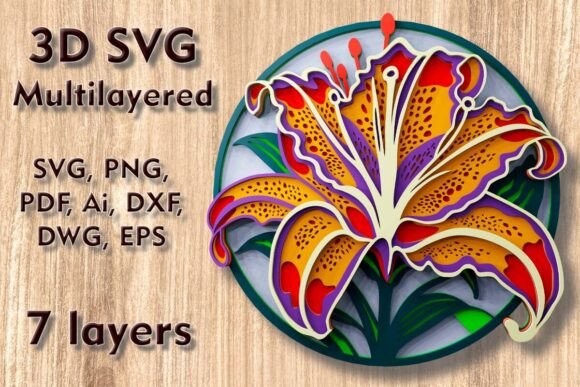
At its core, this design is a testament to the power of layering. Comprising seven distinct layers, the Lily motif offers a complex interplay of shadows and highlights that change depending on the viewer’s angle and the ambient lighting of the room. The visual characteristics are organic yet precise, capturing the delicate curvature of lily petals while maintaining the structural integrity required for cutting machines. The style is best described as modern botanical elegance—clean enough to fit into minimalist interiors, yet detailed enough to serve as a focal point in eclectic or traditional spaces.
Understanding the Design Architecture
When we discuss Lily 3d SVG Multilayer Cutting Files, we are talking about a file structure engineered for precision. The design comes with a default size of 240 x 240 mm (9.45 x 9.45 inches), a dimension that strikes a balance between visibility and manageability for most home crafting setups. However, the true utility of this asset lies in its scalability. While the size can be easily increased to create statement pieces for larger walls, creators must exercise caution when reducing the design.
The intricate nature of the seven layers means that thin elements—such as the tips of petals or the fine veins within the flower structure—are vulnerable to tearing or breaking if scaled down too aggressively. This is a critical consideration for anyone working with fragile materials like paper or cardstock. For those using rigid materials like plywood or MDF, the risk is slightly lower, but the aesthetic proportion may suffer if the details become too compressed. Understanding these physical limitations is part of mastering the medium.
The file package is comprehensive, reflecting the needs of a diverse maker community. Upon purchase, users receive a ZIP folder containing SVG, layered SVG files, DXF, DWG, EPS, AI, PNG, and PDF formats. This versatility ensures compatibility across a wide spectrum of hardware. Whether you are operating a Cricut Explore, a Silhouette Cameo, a Glowforge laser cutter, or a professional CNC router, the Lily 3d SVG Multilayer Cutting Files are ready to integrate into your workflow without the need for cumbersome conversion processes.
Material Selection and Visual Impact
The choice of material fundamentally alters the personality of the final piece. The Lily 3d SVG Multilayer Cutting Files are compatible with plywood, paper, cardstock, MDF, wood, acrylic, cardboard, and even aluminum. Each material brings a different emotional weight to the design.
- Plywood and Wood: Using natural wood grains adds warmth and organic texture. The layers create deep shadows, emphasizing the three-dimensional aspect. This is ideal for rustic, farmhouse, or Scandinavian-inspired interiors.
- Paper and Cardstock: These materials allow for color experimentation. By using varying shades of the same hue, or contrasting colors, crafters can create a pop-art effect or a soft, pastel dreamscape. Paper is also lighter, making it easier to hang in temporary displays or as part of event decor.
- Acrylic: Clear or tinted acrylic introduces a modern, sleek aesthetic. Light passes through the layers, creating a glowing effect that is particularly striking when backlit. This approach works well in contemporary apartments or office spaces.
- MDF and Cardboard: These are cost-effective options for prototyping or large-scale installations where weight and budget are concerns. They paint well, allowing for complete customization of the color palette.
It is important to note that you are purchasing digital files, not a physical product. This distinction empowers the creator to iterate and experiment without the constraints of pre-made goods. You become the manufacturer, the designer, and the curator of the final object.
Applications Beyond Wall Decor
While the primary application for Lily 3d SVG Multilayer Cutting Files is home wall decor, the versatility of the design extends into other creative realms. For small business owners and entrepreneurs, this asset can be adapted for packaging design elements, adding a tactile luxury to product boxes for floral or wellness brands. The layered look can be simplified for use in logo design concepts, where the silhouette of the lily serves as a recognizable brand mark.
In editorial design, the high-resolution PNG and PDF files included in the package can be used as decorative headers or chapter breaks in digital magazines or printed catalogs. The clean lines of the vector files ensure that they remain crisp at any resolution, maintaining professionalism in published materials. For social media graphics, the layered structure provides an excellent template for stop-motion animation or reveal videos, engaging audiences with dynamic content that stands out in static feeds.
Furthermore, the design serves as an educational tool for those learning about spatial reasoning and material science. By assembling the seven layers, crafters gain hands-on experience with adhesion techniques, spacing, and balance. This practical knowledge translates to other projects, enhancing the overall skill set of the hobbyist or professional designer.
Technical Considerations for Optimal Results
To maximize the potential of Lily 3d SVG Multilayer Cutting Files, attention to technical detail is paramount. When preparing the files for cutting, always check the layer order in your software. The bottom layer should be the largest, providing the base, while subsequent layers decrease in size to create the stepped, 3D effect. Misaligning these layers can result in a flat, disjointed appearance rather than the intended cohesive bloom.
For laser cutting, focus settings must be adjusted according to the material thickness. Plywood and MDF may require multiple passes or higher power settings, while paper and cardstock need delicate handling to avoid scorching. If using a CNC machine, bit selection is crucial; a smaller end mill will capture the finer details of the lily’s interior structures, while a larger bit may round off sharp corners, altering the design’s crispness.
Adhesion is another critical factor. Using double-sided tape, foam adhesive squares, or specialized craft glues can affect the final height and stability of the piece. Foam adhesive adds significant depth, enhancing the 3D illusion, but requires precise placement to prevent visible gaps. Liquid glue offers a flush finish but demands patience during drying to prevent warping, especially with paper-based materials.
Ultimately, the Lily 3d SVG Multilayer Cutting Files offer more than just a pattern; they provide a framework for creative expression. By understanding the interplay of size, material, and technique, designers and crafters can produce works that are not only visually stunning but also technically proficient. This digital asset bridges the gap between virtual design and physical reality, enabling the creation of enchanting home decor that resonates with both modern aesthetics and timeless natural beauty.